Author: Mohsin Kamran
Published: August 11, 2026
Gemstones are among the most fascinating natural materials found on Earth. Valued for their colour, beauty, rarity, durability, and unique characteristics, gemstones have been used for thousands of years in jewellery, ornaments, collections, cultural objects, and luxury goods.
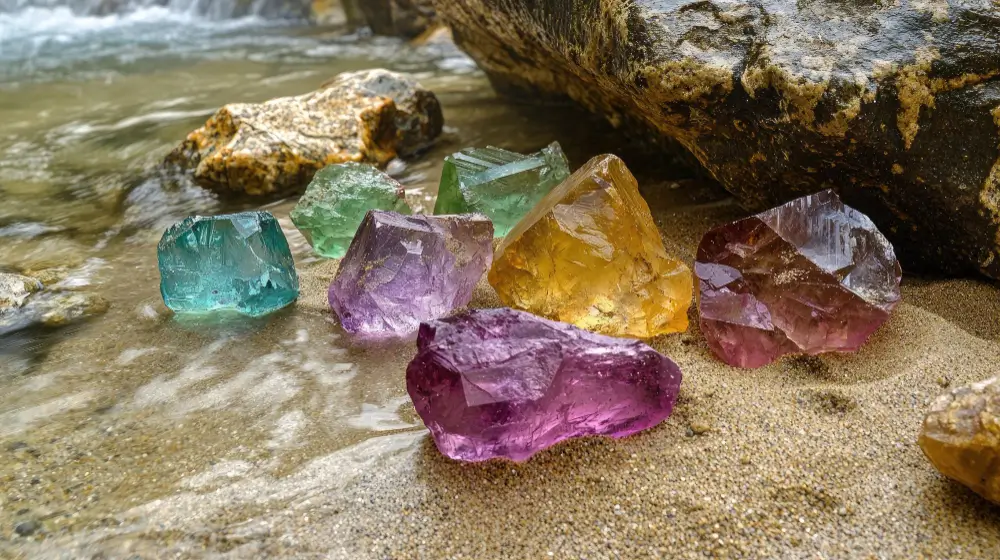
From the deep red of a ruby and rich green of an emerald to the brilliant blue of sapphire and the vibrant colours found in tourmaline, natural gemstones occur in an extraordinary variety of colours, sizes, shapes, and qualities.
But what exactly is a gemstone? How are gemstones formed? What are the different types of gemstones? What is the difference between natural, synthetic, and imitation stones? And what makes one gemstone more valuable than another?
This complete guide explains what gemstones are, how they are classified, the difference between rough and polished gemstones, gemstone treatments, how gemstone value is determined, and what buyers should know before purchasing a natural gemstone.
A gemstone is a mineral, rock, or organic material that is valued for characteristics such as beauty, rarity, colour, transparency, durability, or other distinctive properties.
Most gemstones are cut and polished before being used in jewellery. However, natural rough gemstones and mineral specimens can also be valuable to collectors, gemstone dealers, cutters, jewellers, and enthusiasts.
Gemstones are formed through different natural geological or biological processes. Their characteristics depend on factors such as chemical composition, crystal structure, geological environment, and the conditions under which they formed.
Some well-known gemstones include:
Even gemstones belonging to the same variety can look very different. Differences in colour, clarity, size, inclusions, origin, treatment, and cutting can have a significant effect on their appearance and value.
Gemstones can form through a variety of geological processes over extremely long periods of time.
Some gemstones crystallize from minerals in molten rock, while others form through heat, pressure, chemical reactions, or changes within existing rocks. Certain gemstone materials have biological origins.
For example, diamond forms deep within the Earth under extremely high pressure and temperature. Ruby and sapphire form under geological conditions that allow corundum crystals to develop, while emerald forms as a variety of the mineral beryl under specific chemical conditions.
The environment in which a gemstone forms can influence its:
This geological history is one reason natural gemstones are so diverse. Stones from different regions can have distinctive characteristics that make them interesting to both collectors and the gemstone trade.
No. Although many gemstones are minerals, not every gemstone material is classified as a conventional mineral.
For example:
This is why the term “gemstone” covers a broader group of natural materials than the term “mineral.”
Gemstones can be classified in several ways, including their mineral composition, geological origin, physical properties, colour, and traditional commercial classifications.
A traditional commercial classification divides gemstones into precious gemstones and other gemstones.
It is worth noting, however, that “precious” and “semi-precious” are traditional commercial terms rather than scientific classifications. A gemstone’s value cannot be determined simply by placing it into one of these categories.
The four gemstones traditionally recognized as the major precious gemstones are:
Diamond is one of the world’s best-known gemstones and is renowned for its exceptional hardness, brilliance, and optical properties.
Natural diamonds can be colourless or occur in various natural colours, including yellow, brown, pink, blue, and others.
Diamond value can depend on factors including:
Ruby is the red variety of corundum and is one of the world’s most sought-after coloured gemstones.
Its colour can range from pinkish-red to intense red. Strong, attractive colour is particularly important when evaluating ruby.
Rubies are commonly used in:
The value of a ruby can vary considerably depending on its colour, clarity, size, treatment, origin, and overall quality.
Sapphire is another variety of corundum. Blue sapphire is the most famous variety, but sapphires can occur in several other colours, including pink, yellow, green, and more.
Blue sapphire remains one of the most popular coloured gemstones in jewellery.
Sapphire quality can be influenced by:
Emerald is the green variety of beryl and is one of the world’s most recognizable gemstones.
Natural emeralds commonly contain inclusions. These internal characteristics are so common in emerald that the term jardin, meaning “garden” in French, is often used in the gemstone trade to describe their characteristic inclusion patterns.
Emerald value can depend on:
Many other gemstone varieties are widely traded, collected, and used in jewellery around the world.
| Gemstone | Common Colours |
|---|---|
| Amethyst | Purple to violet |
| Aquamarine | Light blue to blue |
| Peridot | Green |
| Tourmaline | Green, pink, red, blue and other colours |
| Topaz | Blue, yellow, pink and other colours |
| Garnet | Red, green and other colours |
| Tanzanite | Blue to violet |
| Citrine | Yellow to orange |
| Opal | Various colours with play-of-colour |
| Spinel | Red, pink, blue and other colours |
| Zircon | Blue, yellow, brown, colourless and other colours |
| Turquoise | Blue to green |
| Lapis Lazuli | Deep blue with mineral inclusions |
Each gemstone has its own combination of physical, chemical, and optical characteristics.
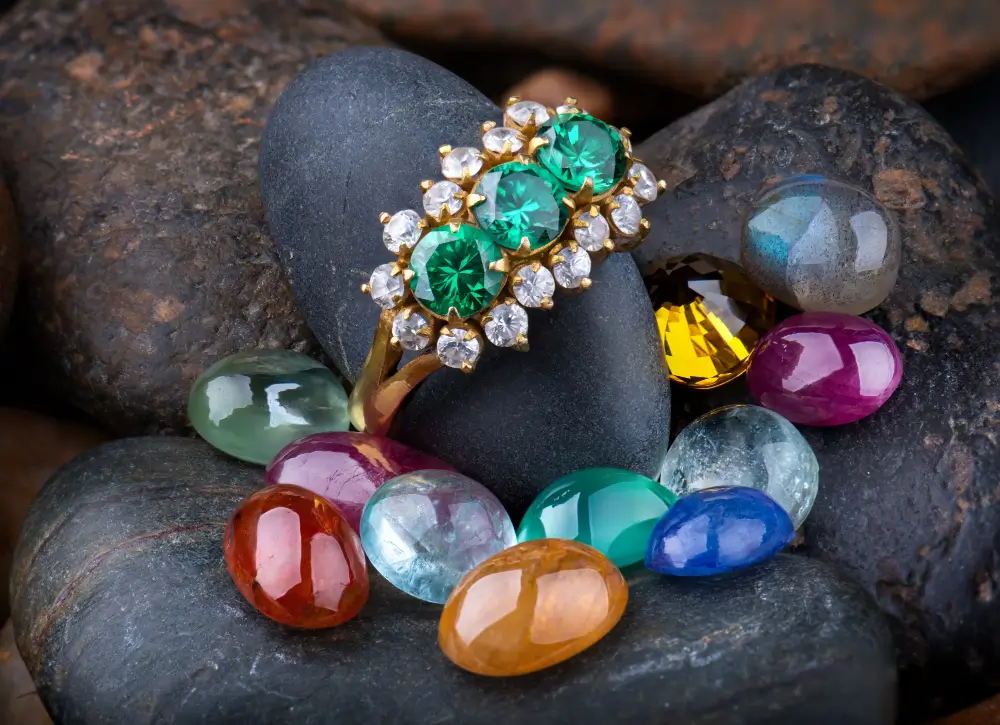
One of the most important things to understand when buying gemstones is the difference between natural, synthetic, and imitation materials.
Natural gemstones are formed through natural geological or biological processes.
They may be mined or recovered from natural deposits and can subsequently be cut, polished, or treated.
Examples include:
A natural gemstone may be either untreated or treated. Therefore, the terms natural and untreated should not be treated as synonyms.
Synthetic gemstones are laboratory-created materials that have essentially the same chemical composition and crystal structure as their natural counterparts.
For example, synthetic ruby is created in a controlled laboratory environment but corresponds to natural ruby in its fundamental material characteristics.
Synthetic gemstones are different from natural gemstones and should be clearly identified and disclosed when sold.
Imitation gemstones are materials that are made to resemble another gemstone but do not have the same chemical composition or crystal structure.
Coloured glass, for example, can be used to imitate the appearance of certain gemstones.
An imitation is therefore different from a synthetic gemstone.
For professional gemstone trading and retail, accurate identification and transparent disclosure are essential.
Some natural gemstones undergo treatments to improve their colour, clarity, stability, or appearance.
Gemstone treatments can include:
The treatment used depends on the gemstone and the desired result.
A treated gemstone is not automatically a fake gemstone. A gemstone can be natural and treated at the same time.
However, treatment can affect:
For this reason, known or detectable treatments should be properly disclosed when a gemstone is offered for sale.
Gemstones are commonly traded in two broad forms: rough gemstones and cut and polished gemstones.
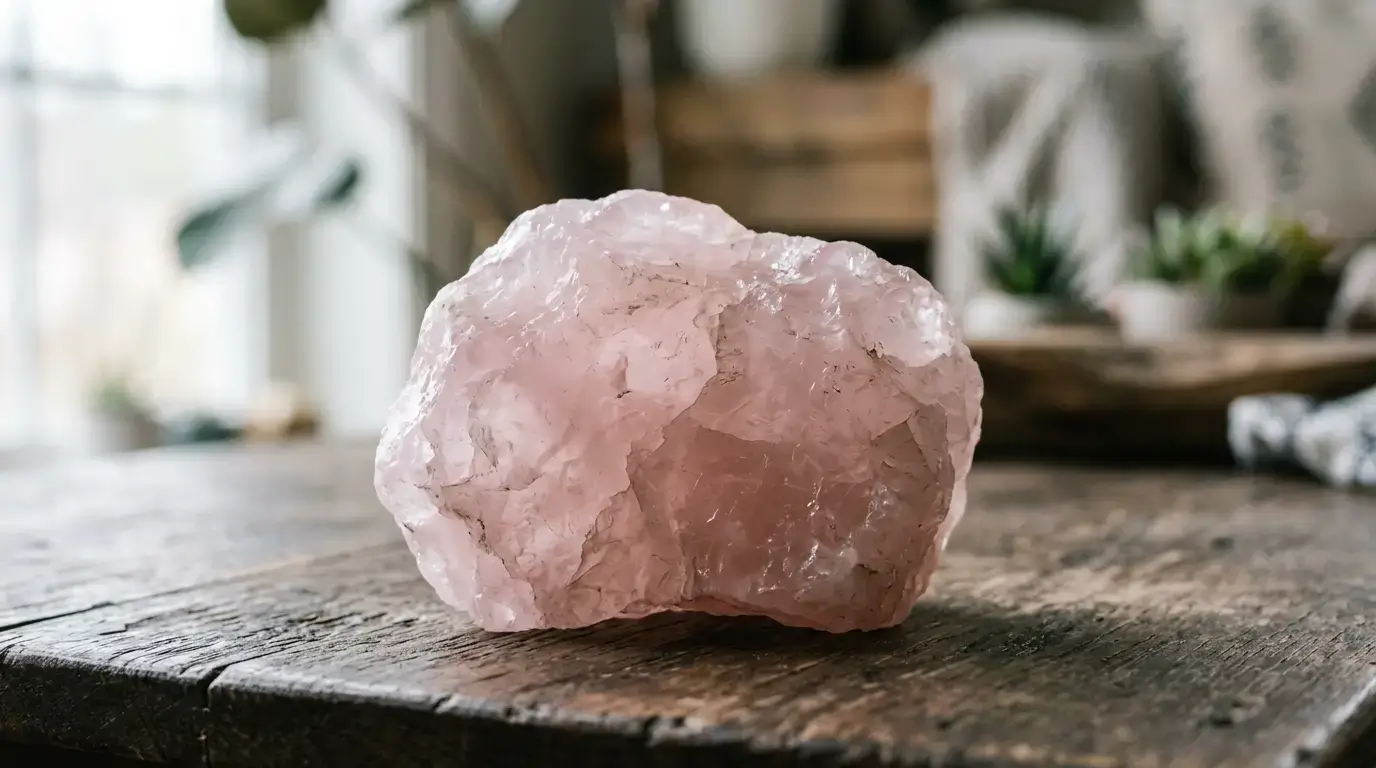
Rough gemstones are natural stones in their original form after mining or extraction.
They have not yet been shaped and polished for jewellery.
Rough gemstone material can contain:
Rough gemstones are commonly purchased by:
The value of rough gemstone material depends not only on its appearance in its natural state but also on its potential after cutting.
A buyer or cutter may need to consider how much usable material can be recovered, what type of finished gemstone could be produced, and whether the resulting stone is likely to have desirable colour, clarity, proportions, and market appeal.
Cut and polished gemstones have been shaped and finished to improve their appearance and prepare them for jewellery or collection purposes.
Common gemstone cuts include:
The best cut depends on the gemstone itself. A cutter must consider its natural shape, colour, clarity, transparency, inclusions, and durability.
The goal is generally to balance beauty and weight retention.
Cutting away too much material can reduce the final carat weight, while retaining too much material may negatively affect the gemstone’s appearance or light performance.
Gemstones do not generally have one universal market price in the way that highly standardized commodities may have.
Two gemstones of the same variety and carat weight can have very different values because of differences in colour, clarity, cut, treatment, origin, rarity, and market demand.
The most important factors can include:
Colour is one of the most important factors when evaluating many coloured gemstones.
Depending on the gemstone, buyers may consider:
An attractive and highly desirable colour can have a major influence on value.
Clarity refers to the internal and external characteristics of a gemstone, including inclusions and other features.
Clarity should not be evaluated in exactly the same way for every gemstone.
For some gemstones, inclusions are common and may provide information about the stone’s natural formation. In other gemstones, high clarity may be particularly desirable.
The effect of clarity on value therefore depends on the gemstone variety and the characteristics of the individual stone.
Cut describes how a gemstone has been shaped and finished.
A well-executed cut can improve:
Cutting also involves deciding how much of the original rough material should be retained.
Carat is a unit of weight used for gemstones.
Larger gemstones of comparable quality can be rarer than smaller stones, but size alone does not determine value.
A smaller gemstone with exceptional colour, clarity, and other desirable characteristics can be more valuable than a much larger stone of lower quality.
Rarity can significantly influence gemstone value.
A gemstone with an unusual combination of desirable colour, clarity, size, origin, and other characteristics may be much harder to find than ordinary commercial-grade material.
Treatment is another important factor.
Some gemstone treatments are widely accepted in the trade, while untreated material may attract a premium in certain markets.
The effect of treatment on value depends on the gemstone, type of treatment, quality of the stone, and market demand.
The geographic origin of a gemstone can influence its desirability and value in certain markets.
Some locations are particularly well known for producing specific gemstone varieties or qualities.
However, origin alone does not automatically make a gemstone valuable. The characteristics and quality of the individual stone remain important.
For higher-value gemstones, an independent laboratory report can provide useful information about the stone.
Depending on the gemstone and laboratory, a report may help identify:
Certification should be considered alongside the actual quality and characteristics of the gemstone.
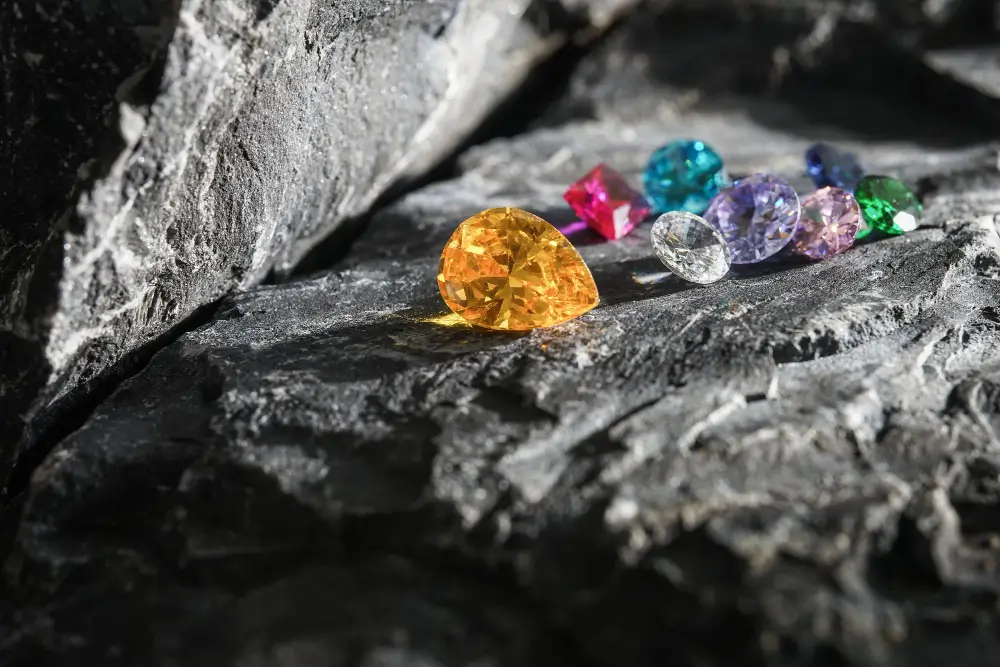
Natural gemstones combine several characteristics that make them desirable in jewellery, collecting, and the international gemstone trade.
Gemstones offer an extraordinary range of colours, transparency, brilliance, and optical effects.
Exceptional natural gemstones can be difficult to find, particularly when desirable colour, clarity, size, and other characteristics occur together.
Natural gemstones often contain individual characteristics and inclusions that make every stone different.
Many gemstones are suitable for jewellery because of their physical durability. However, durability varies significantly between gemstone varieties, so the intended use of a gemstone should always be considered.
Gemstones have been used throughout history in jewellery, royal collections, ceremonial objects, ornaments, and cultural traditions.
Exceptional gemstones can attract collectors because of their rarity, quality, provenance, unusual characteristics, and historical significance.
Pakistan has a diverse geological landscape and is known for a variety of gemstones and mineral specimens.
The mountainous regions of northern Pakistan, in particular, are associated with important gemstone-producing areas. PkGems sources natural gemstone material from regions including Swat, Chitral, Hunza, and Gilgit-Baltistan, while the company’s wider collection also includes gemstone materials associated with other parts of Pakistan.
Pakistani gemstone materials include varieties such as:
Different regions are associated with different gemstone materials and qualities.
Swat is particularly known for emerald deposits and has an important place in Pakistan’s gemstone industry.
The mountainous regions of Gilgit-Baltistan and Hunza are associated with a range of gemstone and mineral materials, including aquamarine, tourmaline, ruby, and other specimens.
The quality of gemstone material can vary considerably even within the same region. Colour, clarity, crystal quality, size, treatment, and other characteristics must therefore be considered when evaluating individual stones.
At PkGems, our focus is on connecting customers with natural gemstones sourced from Pakistan and selected international sources.
The company works with local miners and gem cutters in Pakistan’s gemstone-producing regions and offers both loose gemstones and finished gemstone jewellery. Our collection includes natural stones sourced from regions such as Swat, Chitral, Hunza, and Gilgit-Baltistan.
Our gemstone collection includes a range of materials suitable for jewellery, collectors, gemstone enthusiasts, and buyers looking for natural Pakistani gemstones.
For higher-value gemstones, recognized gemological laboratory certification may also be available for applicable stones. Buyers should always consider the gemstone’s identity, quality, treatment, and supporting documentation when making a purchase.
Buying a natural gemstone involves more than choosing a colour or shape that looks attractive.
Before purchasing, consider the following:
Make sure you know exactly what gemstone you are buying and whether it is natural, synthetic, or an imitation.
Ask whether the stone has been treated and whether the treatment has been disclosed.
Consider:
For higher-value gemstones, an independent laboratory report can provide additional information about natural status, treatment, and other characteristics.
Two gemstones of the same variety can have significantly different values.
Do not compare gemstones based only on carat weight.
A reputable gemstone supplier should provide clear information about the gemstone, disclose relevant treatments, and avoid misleading claims about natural or synthetic materials.
A gemstone is a mineral, rock, or organic material valued for characteristics such as beauty, colour, rarity, durability, transparency, or other distinctive properties.
The four traditionally recognized precious gemstones are diamond, ruby, sapphire, and emerald. This is a traditional commercial classification rather than a scientific classification.
A natural gemstone forms through natural geological or biological processes. A synthetic gemstone is created in a laboratory and has essentially the same fundamental chemical composition and crystal structure as its natural counterpart.
Yes. A natural gemstone can be treated to improve its appearance or stability. Treatment should be properly disclosed because it can affect value, care requirements, and other characteristics.
Yes. Rough gemstones can have significant value depending on their quality and their potential after cutting and polishing. Rough material is evaluated based on factors such as colour, clarity, crystal form, size, fractures, and expected cutting yield.
There is no single factor that determines gemstone value. Colour, clarity, cut, carat weight, rarity, treatment, origin, certification, and market demand can all influence price.
Pakistan produces a wide range of natural gemstone materials, and exceptional stones can be highly desirable. However, value depends on the characteristics and quality of each individual gemstone rather than simply its country of origin.
No. Certification is particularly useful for higher-value gemstones or when information such as natural status, treatment, or origin needs independent verification.
Gemstones are the result of remarkable natural processes and represent a combination of geology, beauty, rarity, craftsmanship, and cultural history.
Understanding gemstones begins with knowing the difference between natural, synthetic, imitation, and treated materials. From there, factors such as colour, clarity, cut, carat weight, rarity, treatment, and origin help explain why gemstones of the same variety can have very different values.
Pakistan’s rich geological landscape also makes it an important source of natural gemstones and mineral specimens, particularly from regions such as Swat, Chitral, Hunza, and Gilgit-Baltistan.
Whether you are looking for a loose gemstone, a stone for jewellery, a collector’s specimen, or a natural Pakistani gemstone, informed buying and transparent sourcing are essential.
At PkGems, we aim to make natural gemstones more accessible by connecting customers with gemstones sourced from Pakistan and beyond, supported by clear product information and authenticity practices.
**Explore the PkGems collection to discover natural gemstones and jewellery from Pakistan.